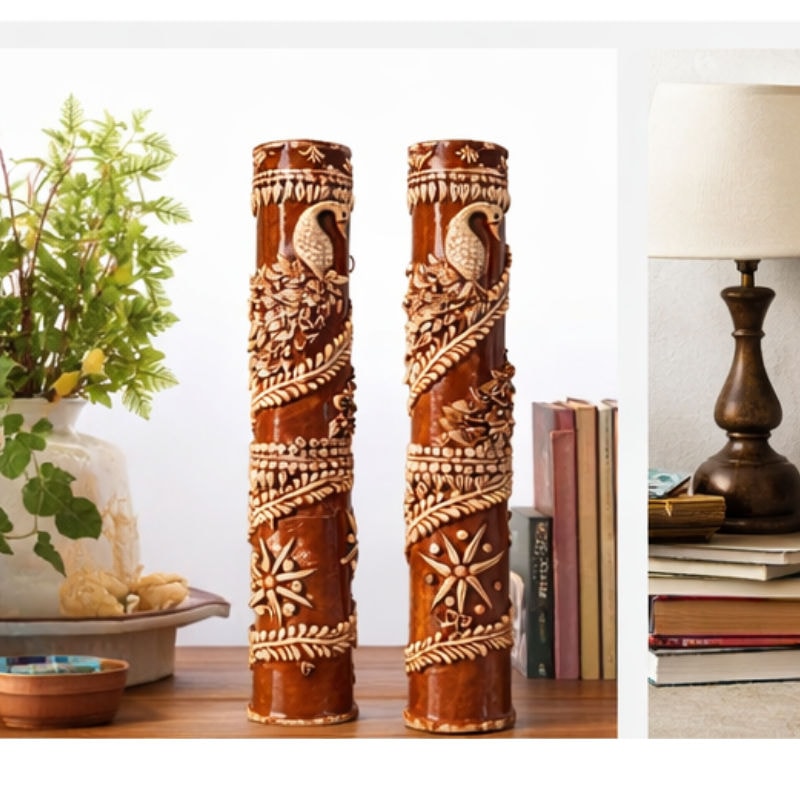
There is a pillar that has stood at the entrance of Indian temples, palaces, and homes for over two thousand years.
Carved with peacocks, adorned with floral motifs, and finished in deep terracotta or antique gold — this is the Mor Stambh, one of India's most sacred decorative pillars.
Today, the Mor Stambh is no longer limited to temples and heritage structures. It is making a strong comeback in modern homes — from living rooms to entryways — as a symbol of tradition, beauty, and spiritual meaning.
What Does "Mor Stambh" Mean?
Meaning Breakdown
Mor = Peacock (symbol of prosperity, grace, and protection)
Stambh = Pillar (a sacred column connecting earth and heaven)
Together, Mor Stambh means "Peacock Pillar" — a decorative yet deeply spiritual structure rooted in Indian culture.
The Ancient History of Stambh in India
The concept of the stambh is deeply embedded in Indian civilization. One of the most famous examples is the Pillars of Ashoka, built in the 3rd century BCE across the Indian subcontinent.
Even earlier, the Atharva Veda described the stambha as a cosmic pillar — the axis of the universe that connects heaven and earth.
Insight
A stambh is not just an architectural structure — it represents balance, stability, and cosmic order.
Why the Peacock? The Sacred Symbolism
The peacock is one of the most powerful symbols in Indian mythology.
- Lord Kartikeya: The peacock is his divine vehicle
- Lord Krishna: Wears peacock feathers in his crown
- Goddess Saraswati: Symbol of wisdom and creativity
- Goddess Lakshmi: Associated with prosperity and abundance
Symbolism
Peacock motifs are believed to attract prosperity, protect against negative energy, and bring harmony into the home.
What Does a Mor Stambh Look Like?
| Height | 60–150 cm |
| Shape | Cylindrical or tapered pillar |
| Design | Peacock carvings + floral patterns |
| Finish | Antique brown, terracotta, or gold |
| Material | Ceramic, wood, or stone |
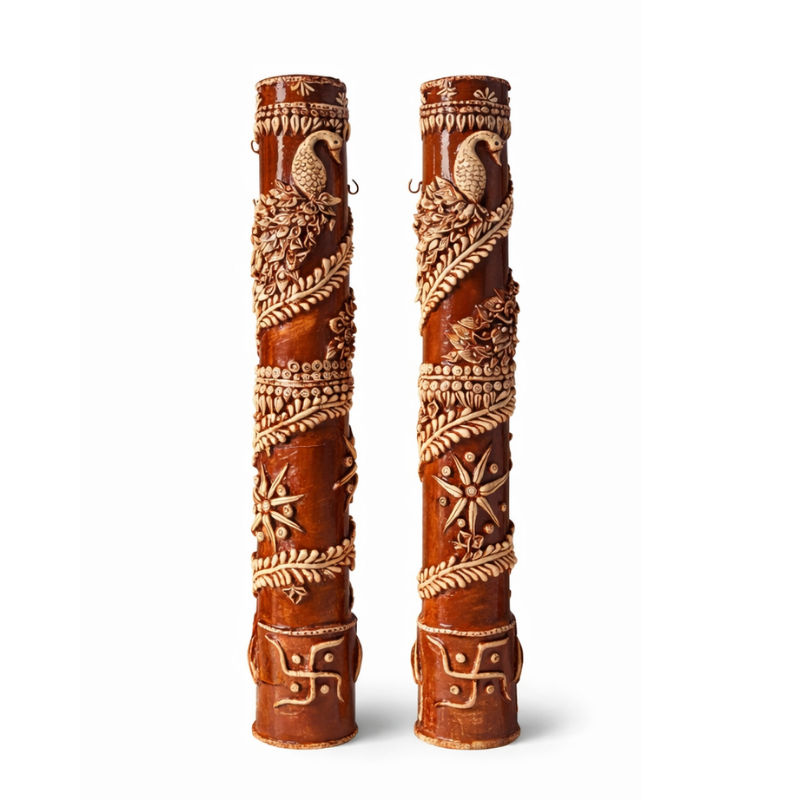
Each Mor Stambh is unique — handcrafted with intricate detailing that reflects the skill of Indian artisans.
Where to Place a Mor Stambh in Your Home
- Entrance: Creates a grand and protective entry
- Pooja Room: Enhances spiritual energy
- Living Room: Acts as a statement decor piece
- Events: Perfect for weddings and festive setups
🧭 Vastu Tip: Place Mor Stambh in the North or East direction for positive energy and prosperity.
Bring Home a Mor Stambh
Each piece is handcrafted by skilled artisans — no two are alike. Limited stock available.
Limited Handcrafted Stock
Handcrafted Peacock Mor Stambh Set
🏺 Shop Now — Order TodayFree shipping · Handpacked with care · Authenticity guaranteed
Why Mor Stambh Belongs in Modern Homes
The Mor Stambh is more than decor — it is a piece of Indian heritage that brings meaning, balance, and beauty into your living space.
In a world filled with mass-produced decor, a handcrafted Mor Stambh stands out as something truly unique and timeless.
"When you place a Mor Stambh in your home,
you are not just decorating — you are preserving tradition."